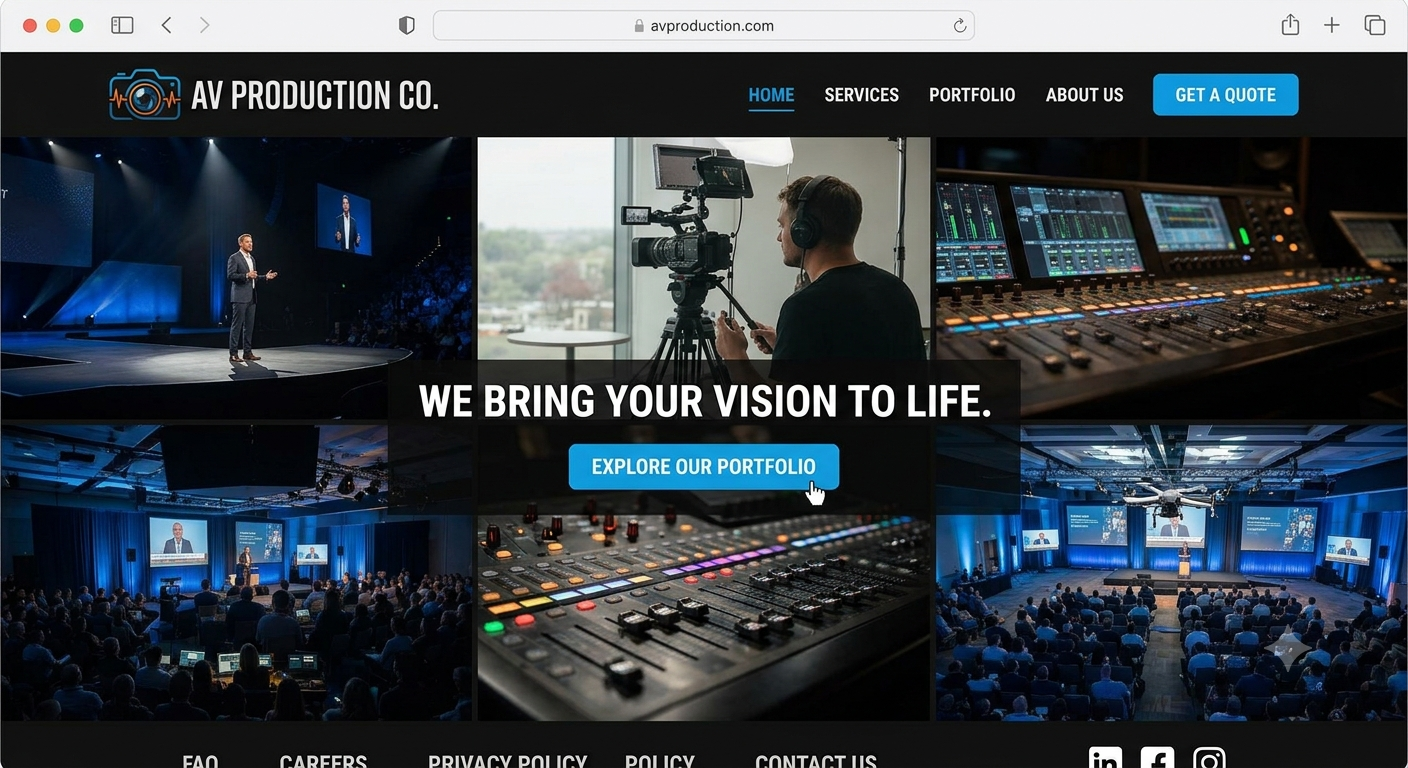
Open ten websites in the AV and live events industry. Read the homepages back to back.
Innovative. Customer-focused. Full-service. Passionate about what we do.
You could swap the logos and nobody would notice.
This is not a coincidence. It’s what happens when companies describe themselves the way they want to be seen, instead of the way they actually are. The words feel safe. They also say nothing.
The fix isn’t a better tagline. It’s a different question. Not “what do we want to say about ourselves,” but “what is actually true about us that nobody else can claim.”
Positioning comes before promotion
Most owners treat marketing as a volume problem. Post more. Email more. Show up at more events. If the message isn’t landing, the instinct is to say it louder or say it more often.
But volume doesn’t fix a message that isn’t differentiated. It just spreads the sameness further.
Before any of that, there’s a quieter question to answer: why would someone pick you over the company down the street with the same equipment and similar pricing? If the honest answer is “I’m not sure,” that’s the actual problem. Not the posting schedule.
Clear positioning changes the shape of the sales process. When people understand what makes you different before they ever talk to you, they stop comparing you against five competitors. They start looking for you specifically. The sales conversation gets shorter, because half of it already happened before they called.
Systems beat hustle
Here’s the second problem, and it’s a more common one. Marketing that depends on finding an extra hour in the week isn’t a strategy. It’s an emergency that hasn’t happened yet.
A lot of small business marketing runs this way. It happens when there’s time, which means it happens unevenly, which means visibility comes and goes, which means leads come and go with it. The business ends up tied to how many networking events the owner attended that month, or whether they remembered to post on LinkedIn before the week got away from them.
The alternative isn’t doing more. It’s building something repeatable enough that it keeps running without constant attention. Foundational pieces that consistently put the business in front of the right people, build enough trust that those people remember the name, and create steady, low-effort openings for someone to reach out.
None of this requires more hours. It requires fewer decisions. A system doesn’t ask “what should I post today.” It already knows.
The two questions, in order
Put together, the approach comes down to two questions, asked in a specific order.
First: what makes us different, and can we say it clearly enough that the right people notice?
Second: how do we keep saying it without it depending on us remembering to?
Most companies skip straight to tactics. Which platform, which post frequency, which ad spend. But tactics built on an undifferentiated message just produce more noise, faster. And tactics that depend on the owner’s free time produce noise that disappears the moment the owner gets busy, which is most of the time.
Get the positioning right first. Build the system second. Everything after that is just execution.