There’s a reason so many live production companies hit a ceiling they can’t break through. They do great work. They have skilled people. They’re busy. And still, at the end of the year, the profit doesn’t match the effort.
The answer is almost always the same: they’re running a service company like a rental company.
Rental companies have a fatal structure. The equipment note doesn’t care whether you had revenue last month. The lease is due regardless. So every slow period becomes a cash crisis, and every cash crisis leads to the same decision: take the job at whatever price they’ll pay, just to keep the lights on. Once you’ve done that a few times, you’ve trained your market on what you’re worth.
That’s the death spiral. Not bankruptcy. Not one bad year. The slow erosion of your pricing power because revenue became more important than standards.
The Chair on the Beach
Picture a simple rental business: hammocks on a beach. You buy the chairs, tourists pay to sit, you repeat the process. Clean.
Now add a competitor with the same chairs. Your price goes down. Then a better chair hits the market, one with more cup holders and a massage function, and suddenly your chairs are worth less. You’re facing the same math that AV companies face every time someone buys the same projectors you own, or a new LED product makes last year’s investment look dated.
The rental model survives on the assumption that demand stays consistent enough to cover fixed costs spread across twelve months. It almost never does. You’ll have two great months, maybe three, and then you’ll look at the annual number and wonder where the money went.
What’s different about a service business is that your value isn’t in the box. It’s in what you do with the box. That shift in thinking changes everything about how you price, how you sell, and how you measure success.
What Success Actually Looks Like
Ask most business owners what success means and they’ll pause. Not because they haven’t thought about it, but because the answer they’ve always assumed, more revenue, more equipment, more shows, turns out to be a metric, not a destination.
The real answer is this: success is having to do fewer of the stressful things.
That means consistent profit. It means employees who know why they come to work. It means clients who pay, come back, and refer others. And it ultimately means one thing: the luxury of working exclusively with ideal customers.
You’re never going to get there if every decision you make is a cash flow decision. When there’s no money, the business makes every choice for you. You say yes to the difficult client because you need the deposit. You agree to terms that don’t work for you because you need the job confirmed. You drop your price because a competitor is charging less and you’re afraid.
Every one of those choices is a compromise. The goal isn’t to never make compromises. The goal is to build a business that needs to make them as rarely as possible.
Reading the Market Like a Pro
Most owners know when they’re busy. Very few know why, and almost none are tracking the right signals.
Demand doesn’t live in your warehouse. Demand lives on the buy side. It’s in how many buyers are reaching out, how quickly they’re responding to proposals, and how much lead time they’re giving you.
When demand is high, buyers move faster. They accept quotes with less negotiation. They’re calling you a week before the show instead of six weeks out because they already tried two other companies. Last-minute work isn’t a problem. It’s a signal that the market is hot and supply is tight. Operations people who hate last-minute jobs are missing the point. That’s exactly when margins go up and buyers have the least leverage.
When demand is low, the phone goes quiet and proposals stop moving. The instinct is to add more bells and whistles to the quote, to justify the number by showing more value. That instinct is wrong.
When demand is low, get to the smallest number you can defend and get confirmation on the baseline. Everyone agrees you need sound, screens, and a lit presenter. Get that signed. Put a good-until date on it. Everything else, the LED lobby wall, the digital signage, the upgrades, stays on the table with a longer window. Once they’ve committed to the baseline, everything they add on is margin you didn’t have to fight for. Ask anyone who’s been doing this long enough: the add-ons are worth more than the original job.
If you don’t have a good-until date on your proposals, you have no control over your demand at all. Everything has to expire.
Three Things About Capacity That Will Surprise You
First: you almost never know your actual capacity.
The operations team coming to you and saying “we’re too busy” is a feeling, not a data point. The question is specific: what is the actual constraint? One key person on vacation? A truck tied up cross-country? Those are solvable problems, not capacity limits. You don’t know your capacity until you know exactly how many resources you have left to deploy and what each of them can do.
Second: when capacity is strained, the right move is to raise your price, not guard your calendar.
When you and every competitor in your market are slammed, sub-renting costs more, mistakes are more likely, and your risk goes up. The price should reflect that. A 20% margin on a fully sub-rented job may not cover the risk you’re absorbing. If your capacity is constrained and you’re not building that into your number, you’re subsidizing someone else’s problem.
Third: when capacity is strained, you don’t want to win new buyers’ first jobs.
That sounds counterintuitive. It’s not. A first-time buyer hasn’t seen your process. They don’t know your value yet. You can’t deliver at your best when you’re overstretched, and a bad first impression on a new relationship is extremely hard to recover from. Tell them you’re at capacity, help them understand what working with you looks like, and position yourself to win their third job, when they know what to expect and you can actually deliver it well.
The Real Profit Problem
Jobs generate gross profit. That’s all they do.
One job with a 50% margin doesn’t mean you had a good year. It means you had a good job. Net profit is what’s left after every overhead cost is covered across every month, including the months with no shows, the months where the warehouse sat full and the calendar sat empty.
The biggest thing that erodes profit has nothing to do with pricing strategy or market conditions. It’s emotional pricing.
When you look at your number and think “they won’t pay that,” you’ve made a decision with your gut instead of your data. The customer often will pay it. If you’ve been told to raise your labor rates and you haven’t because it felt too high, and then you finally did and the client paid without a conversation, that’s what emotional pricing costs you. It costs you the difference between what you charged and what the market would have paid, multiplied across every job you underpriced.
Price is not a feeling. It’s a function of your costs, your risk, and the value the buyer perceives. Get emotion out of it.
The Business You’re Actually Running
You’re not a rental company. You’re not an equipment company. You’re a show company.
That distinction determines how you price, how you staff, how you talk to clients, and how you plan for the future. Rental companies cover the note. Show companies build relationships, develop expertise, and create experiences that are worth more than the sum of the gear in the truck.
The formula has always been simple: revenue minus direct costs equals profit. What changes as you grow is the complexity of what makes up those costs and the sophistication of how you manage demand. Strategic overhead, marketing, people who can look at an RFP and know what the job is worth in 20 minutes, those aren’t expenses. They’re investments in your capacity to generate more gross profit with less friction.
The companies that figure this out stop running toward every dollar and start choosing which dollars are worth running toward. That’s not a luxury reserved for large companies. It’s the fundamental discipline that separates businesses that grow from businesses that just stay busy.
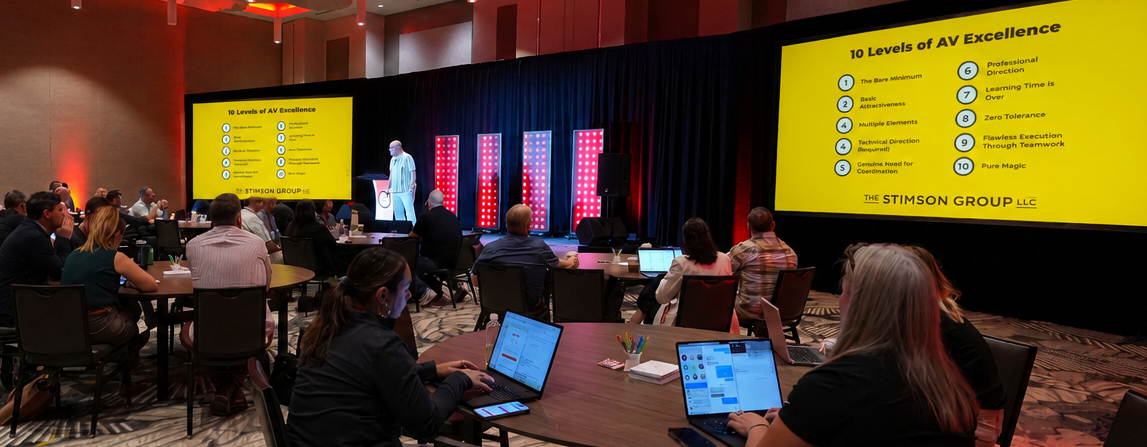
Tom Stimson presented this session at Jumpstart Workshops Spring 2026. Jumpstart Workshops is a live event series for live production company owners.